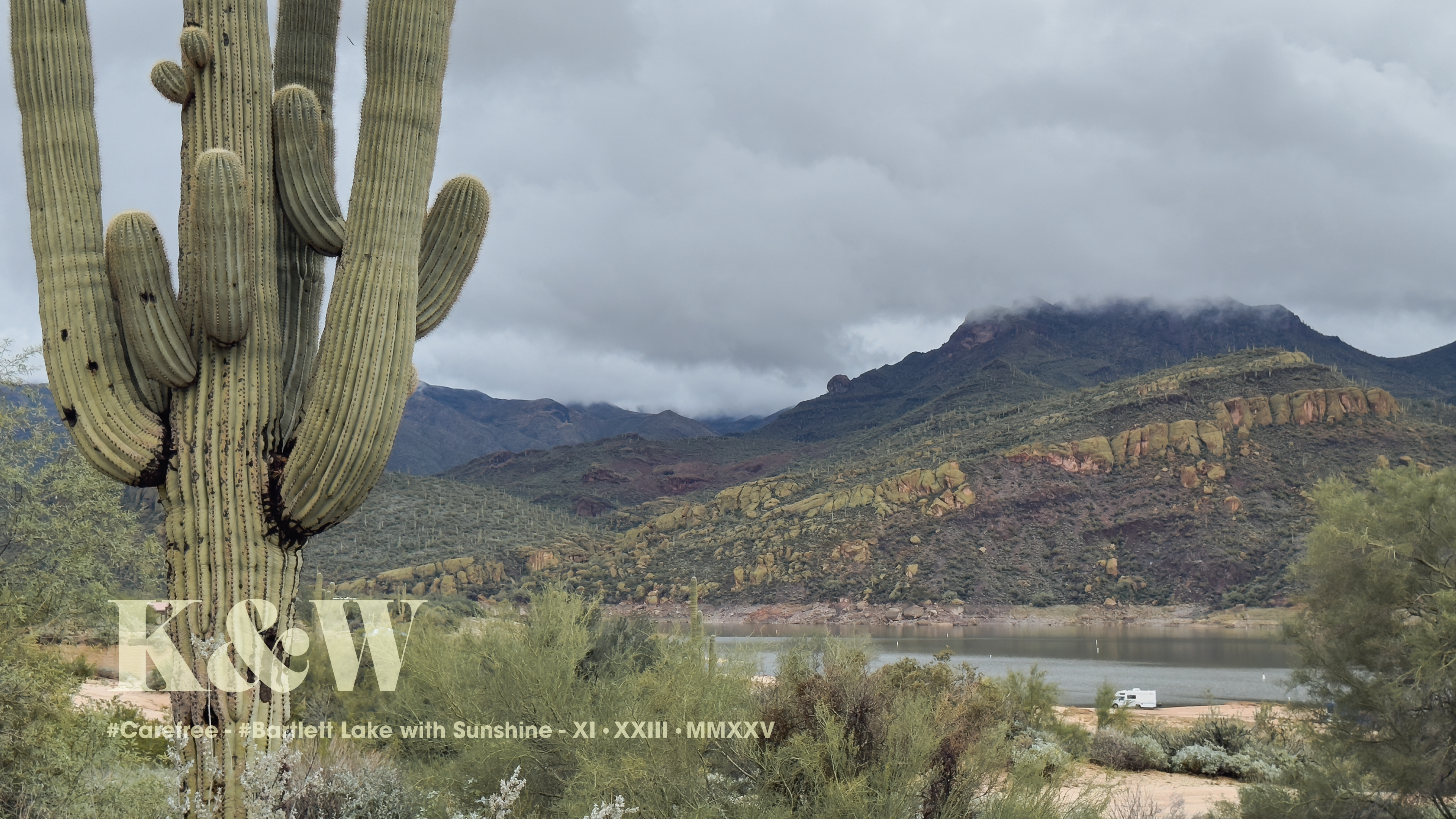
Closer to the shoreline, a single saguaro stands apart from the others, rooted in a small rise of stone that catches the rain before it reaches the lake. Its tall frame is darkened by the weather, each rib slick with moisture, each spine holding a tiny bead of water like a thread of silver. The cactus feels almost ancient in that moment, like it has been watching storms roll across this basin for a hundred years and knows every shift of wind that comes with them.
From where you stand, the lake stretches outward in a soft gray sheet, its surface broken only by the faint touch of raindrops. The shoreline begins to reveal itself—the thin curve where water meets desert earth—and beyond it, the mountains rise sharply out of the lake in deep green walls. The rain has painted them richer than usual, pulling out tones that look almost borrowed from Scotland, those rugged highlands you see in travel books, except here they’re wrapped in desert quiet instead of cold coastal wind.
The closer peaks fade into the mist, their edges softened, while the lower slopes remain crisp and vivid, dense with color. It is the kind of green that doesn’t belong to Arizona and yet fits perfectly in the rain, like the desert is borrowing someone else’s palette for a day. Small stones along the water’s edge glisten in the thin light, and the damp soil carries the scent of creosote and wet earth—an unexpected pairing that somehow feels exactly right under a sky that can’t decide whether to brighten or brood.
You watch the saguaro for a moment longer, its silhouette framed against the pale lake and the dark, rising mountains. For a place known for heat and dust, this rare wash of rain turns everything soft and cinematic, like the world is taking a breath before returning to its usual brightness. The lake feels bigger because of it, the mountains taller, the cactus more heroic, and the whole scene settles into memory with a quiet weight that will stay with you long after the storm pulls away.